

THE SOO LOCKS VISITORS CENTER IS OPEN!
The Visitors Center is open May 1 – Oct. 31
Open daily 10 a.m. – 7 p.m.
A WONDER OF ENGINEERING & HUMAN INGENUITY
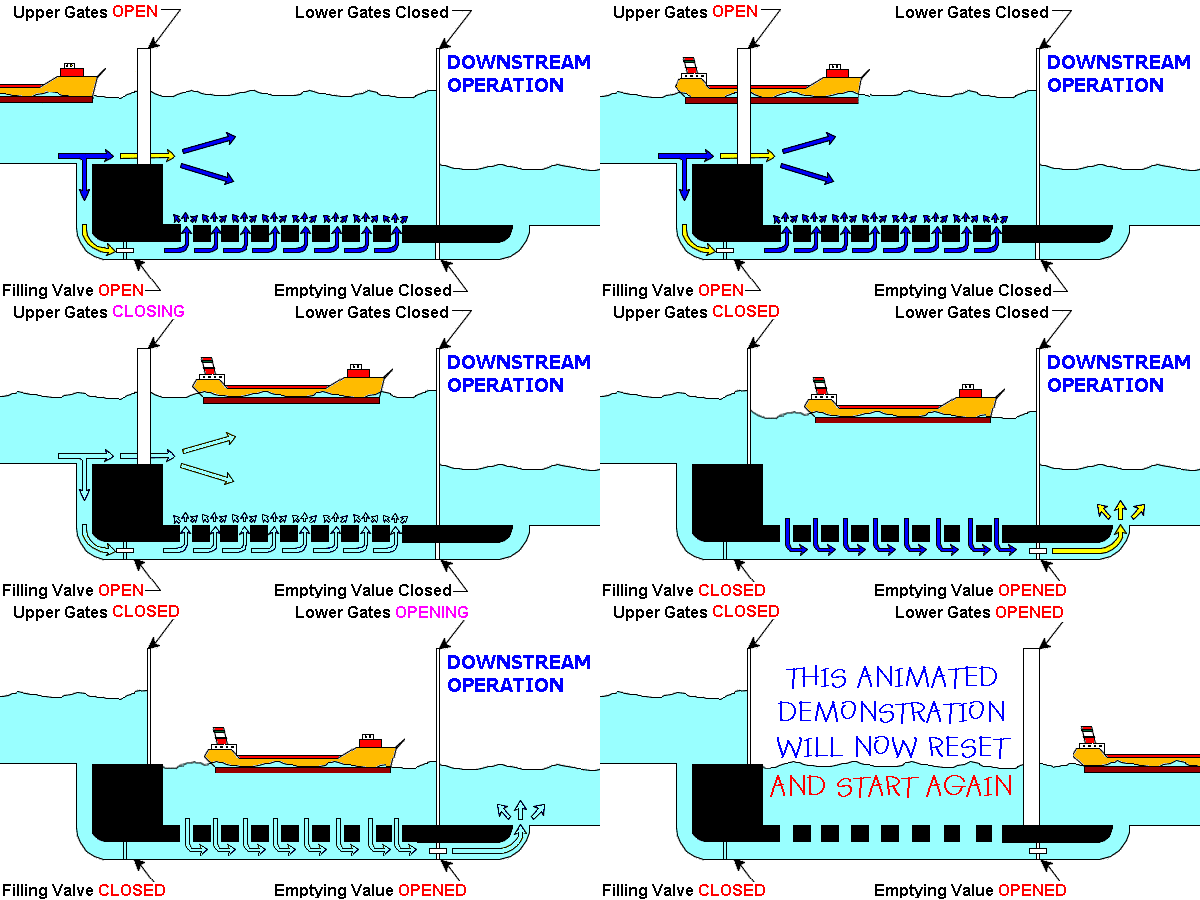
Affectionately called the “Linchpin of the Great Lakes” by the United States Army Corps of Engineers, the Soo Locks are a remarkable feat of engineering and human ingenuity that connect Lakes Superior and Huron. The locks operate by raising and lowering boats between the levels of Lake Superior and the lower Great Lakes using a series of gates and chambers. Water and boats are moved solely by the force of gravity. The Soo Locks date back to the mid-1800s and are a popular tourist destination, attracting an estimated 500,000 visitors annually.
The Soo Locks, located on the St. Marys River, allow freighters to navigate between Lake Superior and the lower Great Lakes, the St. Lawrence Seaway, and international markets. This essential transportation link moves nearly 86 million tons of cargo annually, including 95% of the United States’ iron ore.
Most ships utilize the Poe Lock, which was rebuilt in 1968 to accommodate larger and more modern ships. The MacArthur Lock, which is closest to Sault Ste. Marie, is also still in operation and was named after General Douglas MacArthur. The Davis and Sabin Locks were built in 1914 and 1919 respectively, but currently, only the Poe and MacArthur Locks are operational. However, construction of a new Soo Lock is currently underway, which will be the same size as the Poe Lock.
Construction of a new Soo Lock began in 2019, and it is expected to take up to 10 years to complete. The project as of 2023 now costs $3.22 billion, more than three times its initial price tag, due to labor shortages, supply chain disruptions, and material cost increases over the past four years. The new lock will be built adjacent to the Poe Lock and will be the same size, allowing for more efficient traffic flow and reducing delays. The project is seen as critical to the U.S. economy and national security, as the Great Lakes shipping industry is a vital part of the country’s transportation infrastructure. The new Soo Lock will ensure continued reliable and safe navigation of goods and materials through the Great Lakes, helping to support economic growth and maintain the region’s competitiveness in global markets.
SEE THE SHIPS & EXPLORE THE PARK
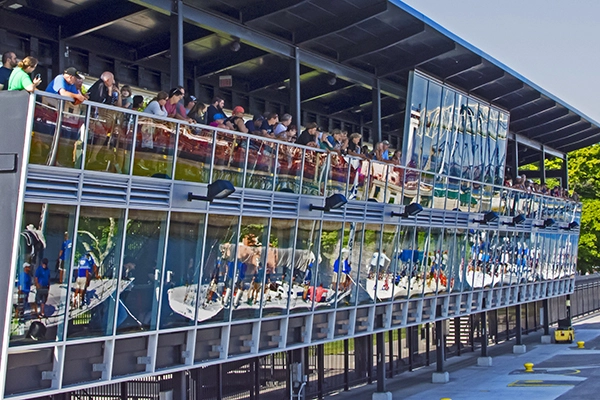
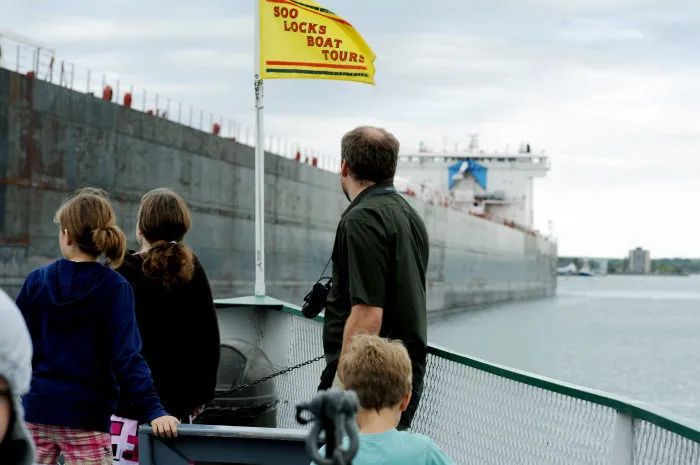
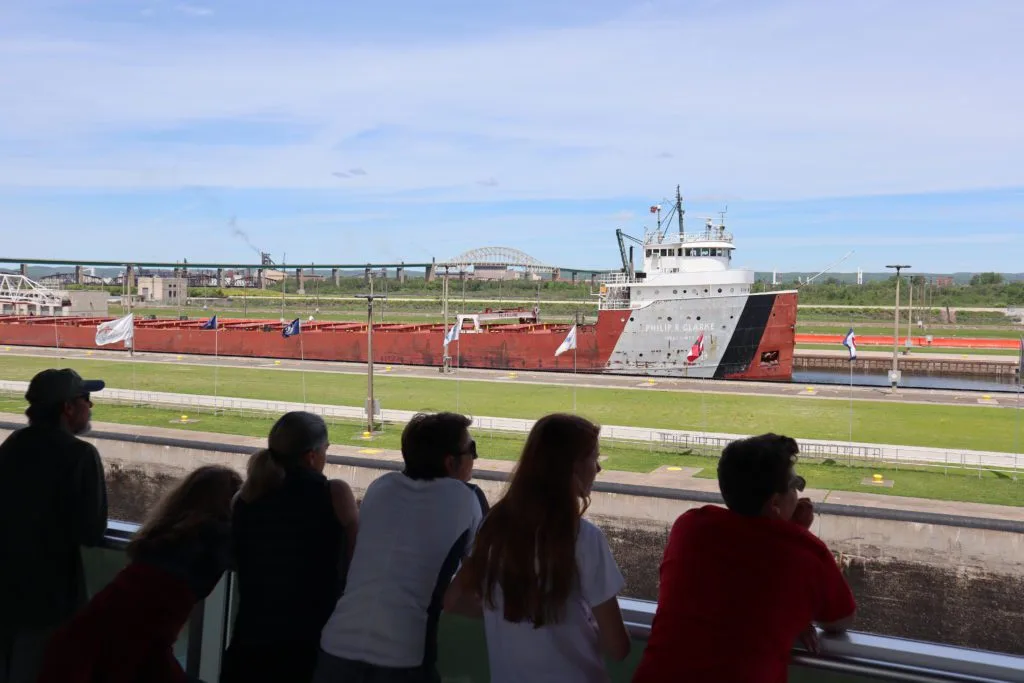
Visitors to the Soo Locks can take in the sights and sounds of mammoth lake freighters and distinctive vessels, such as tall ships, sailboats, cruise ships, and military crafts locking into Lake Superior or Huron. The observation platform located in the Soo Locks Park provides a fantastic vantage point to watch the locking process. The park also boasts a lit fountain, manicured gardens, a beautiful Japanese archway, and trees representing those found throughout the Upper Peninsula.
The Soo Locks Visitor Center is located near the entryway into the park. The center offers a wealth of information about the history of the Soo Locks and the Great Lakes region as a whole. Numerous displays and interactive exhibits provide educational opportunities for all ages.
The historic 1899 US Weather Bureau Building is located to the left of the park’s main entrance and now houses the Great Lakes Shipwreck Historical Society. It offers a public exhibit, museum store sales area, and access to the Shipwreck Society’s noted Great Lakes Images and Papers Collection.
FUN FACTS
- The Soo Locks are 100% gravity-fed and require no pumps.
- To lift or lower a boat, the Poe Lock alone requires an astonishing 22 million gallons of water.
- During repairs, the locks are closed from January 15 to March 25 each year.
- The bedrock beneath the locks is 1,000 feet thick and is made from reddish sandstone.
- It would take 584 train cars to move 70,000 tons of cargo or one 1,000ft freighter.
- The Paul R. Tregurtha is the largest freighter that uses the Poe Lock. It measures in at 1,013.5′ feet long and 105′ wide.
THE FIRST LOCKS
The history of the Soo Locks dates back to the region’s earliest days when the Ojibway Indians portaged their canoes around the “Bawating” (rapids) to reach Lake Superior from the St. Marys River. The Ojibway were originally hunter-gatherers and traders, and they traveled extensively throughout the region by canoe. The area around the Soo Locks was an important gathering place and trading center for the Ojibway for many years. The Ojibway also used the rapids of the St. Marys River, which the Soo Locks were built to bypass, as an important fishing area.
THE FEDERAL GOVERNMENT & THE SOO LOCKS
As trade increased and larger boats became prevalent in the Northwest Territory, the process of unloading and hauling cargo around the rapids in wagons became necessary. In 1797, the Northwest Fur Company constructed a 38-foot navigation lock on the Canadian side of the river for small boats. This lock remained in use until the War of 1812, when it was destroyed. Subsequently, freighters and boats had to be portaged around the rapids once again.
In 1852, Congress passed an act granting 750,000 acres of public land to the State of Michigan as compensation to the company that would build a lock permitting waterborne commerce between Lake Superior and the other Great Lakes. In 1853, the Fairbanks Scale Company, with extensive mining interests in the Upper Peninsula, undertook this challenging construction project.
The first chamber to be built was the State Lock, completed in 1855. This lock tamed the 21-foot difference in water levels between Lake Superior and the other Great Lakes and made easy transport between the two possible.
The Federal Government took control of the property and the lock system in the 1870s. Boats that passed through the State Lock were required to pay a toll of four cents per ton until 1877, when the toll was reduced to three cents.
Within a few years, commerce through the canal had grown to national importance and the need for new locks became clear. The funds required exceeded the state’s capabilities, and in 1881, the locks were transferred to the United States government and were placed under the jurisdiction of the U.S. Army Corps of Engineers. The Corps has operated the locks toll-free since that time.
The Weitzel Lock opened in 1881, and the original Poe Lock, named after Orlando Poe, was completed in 1896. The Davis and Sabin Locks were built in 1914 and 1919, respectively. The MacArthur Lock, named after General Douglas MacArthur, was constructed in 1943, and the Poe Lock was rebuilt in 1968 to accommodate larger and more modern ships such as the 13 1,000 footers of the Great Lakes.
MORE INFORMATION
Call (906) 202-1333 to find out when the next ship will pass through or check out our handy guide.
Soo Locks Park Hours: 9am – 9pm